India Markets Under Oil Shock & Rupee Crisis | BlissMoney 2026
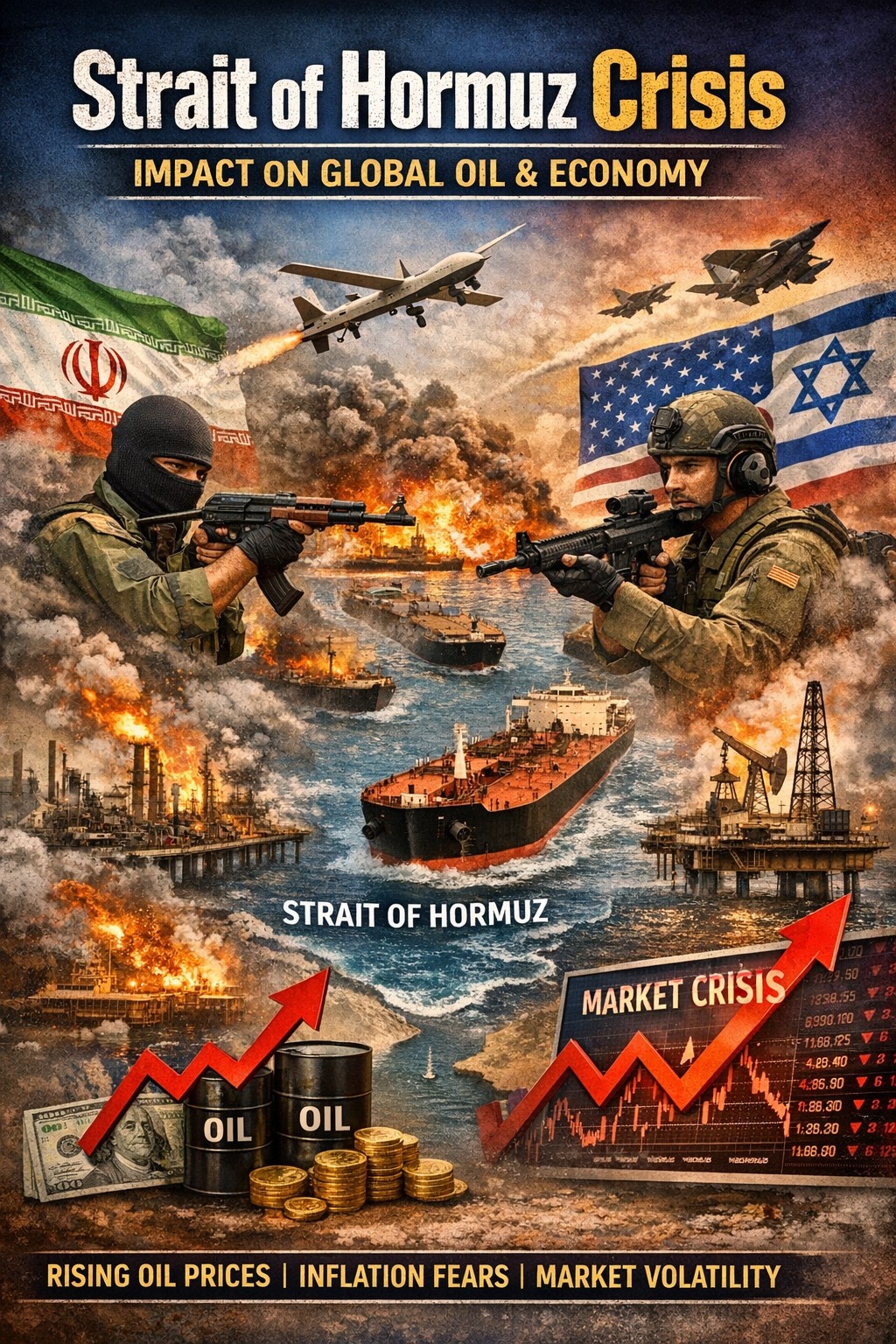
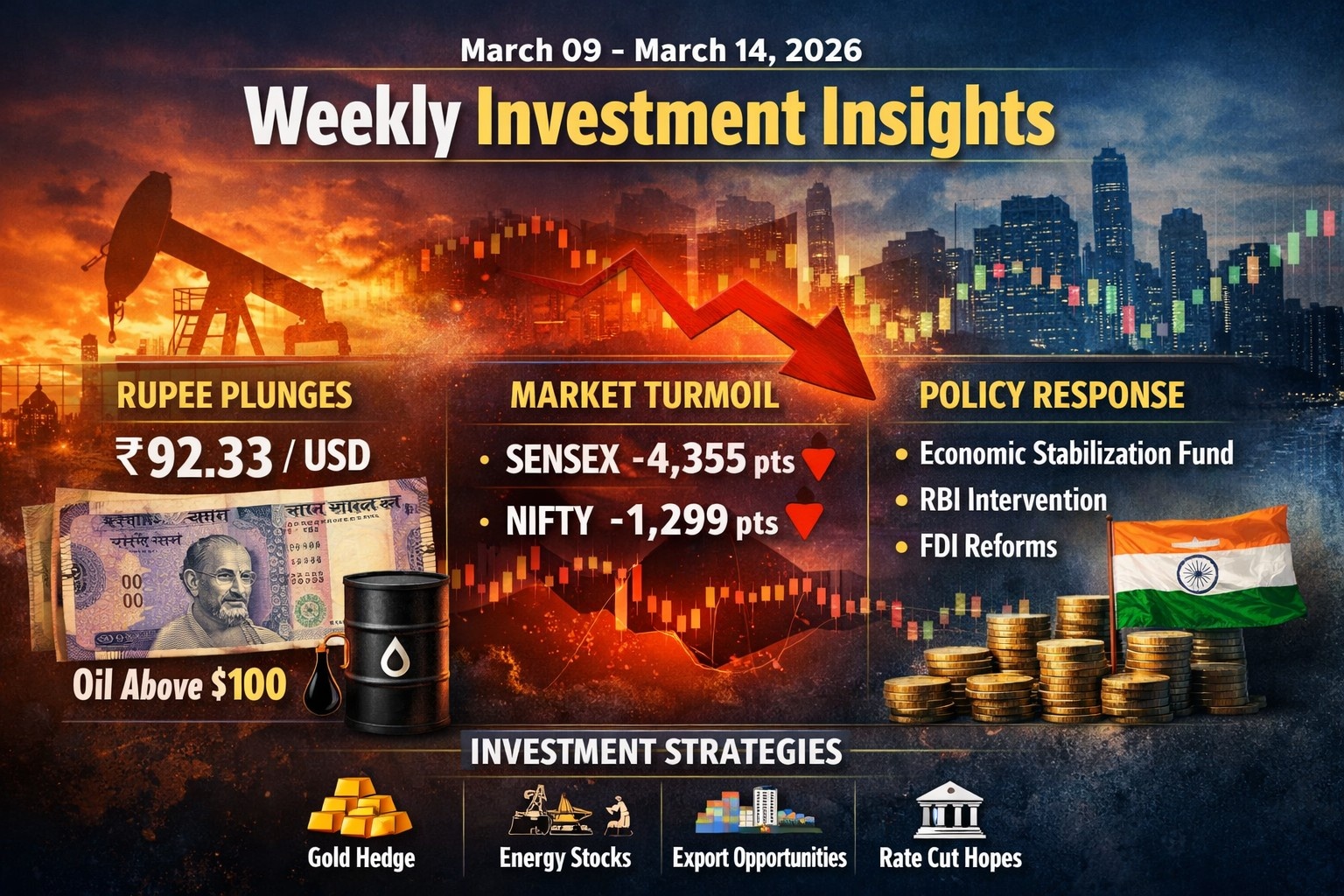
The week of 16–21 March 2026 will be remembered as the moment two major shocks collided in India’s economy: a war-driven crude-oil spike from the West Asia conflict and a sharp rupee depreciation to a record ₹93.73 per dollar.
BlissMoney’s latest Macro & Markets newsletter captures the moment perfectly: “Two Shocks, One Market.” The report shows how India entered the conflict zone with an economy that was already normalising prices and fixing stress pockets in microfinance and jobs. The new reality has front-loaded pain for the next 1–3 quarters but also created a powerful push for efficiency, exports, and policy support.
Here’s a clear, investor-friendly breakdown of the key takeaways — exactly what wealth clients need to know right now.
1. Executive Summary: The Regime Shift Has Begun
India’s economy was already healing when Brent crude shot past $100 and the rupee cracked. The result? A classic terms-of-trade shock that will squeeze corporate margins and household cash flows in the near term.
Portfolio messages that matter most:
- Macro: Higher-for-longer oil + weak rupee = wider current-account deficit, sticky imported inflation, and cautious RBI liquidity management.
- Equities: Near-term margin pain for oil marketing companies (OMCs), airlines, chemicals, metals, fertilisers, and import-heavy manufacturers. Cyclical tailwind for IT, pharma, and other dollar earners.
- Credit: Government backstops for war risk, MFIs, and industrial parks have sharply reduced tail risk in those pockets.
- Asset Allocation: Quality balance sheets, exporters with pricing power, and domestic cyclicals tied to infrastructure are in. Fuel-cost-heavy, price-controlled businesses are out.
- This is not a one-off event — it is a regime shift. Portfolios must adapt.
2. External Accounts: Trade Deficit & Rupee Reality Check
- Trade deficit headline is misleading
- February 2026 merchandise trade deficit narrowed month-on-month to ~$27.1 bn but almost doubled year-on-year because gold and silver imports exploded (gold alone +200 % to ~$7.4–7.5 bn). Services exports stayed strong at ~$39.5 bn, masking the true picture. Bottom line: current-account stress is real but cyclical, not structural.
- Rupee at ₹93.73 — RBI is smoothing, not defending a line
- The rupee recorded its sharpest single-day fall in over three years. RBI let the market reprice while using reserves tactically (reserves fell $18.7 bn to $709.76 bn — still ~11 months of import cover). Clear message: volatility will be managed, but no “line in the sand” that speculators can attack.
Who wins and who loses from the weaker rupee?
- Negative: OMCs, airlines (ATF + war-risk premiums), energy-intensive metals/chemicals/fertilisers, and import-reliant manufacturers.
- Positive: IT services (every 1 % depreciation adds 40–50 bps to margins for large firms), pharma exporters, and global businesses with natural dollar hedges.
- Portfolio tilt: Overweight high-quality dollar earners (top-tier IT, well-positioned pharma, diversified engineering exporters). Underweight fuel-intensive and price-controlled names.
3. Domestic Prices & Real Economy: Inflation & Sector Stress
WPI is turning - Wholesale inflation rose to 2.13 % in February (from 1.81 % in January) and is heading toward mid-3 % in March as higher crude feeds through. Fuel & power (still in deflation at –3.78 %) will flip sharply. CPI will understate the shock because fuel weighs far more in WPI — meaning producer margins get squeezed first.
Aviation: fuel fire meets war-risk premiums. Jet-fuel crack spreads hit ~$100/bbl. ATF now forms 26–40 % of airline costs. April 1 reset will embed recent spikes unless the government forces staggered pass-through. Hull war-risk insurance has also jumped sharply. Expect compressed margins in Q4 FY26 and Q1 FY27; aviation is a tactical trading play, not a core holding.
Labour market lagging but still relevant - Unemployment eased slightly to 4.9 % in February (pre-shock data). Youth unemployment remains sticky near 15 %. The coming energy-cost squeeze will hit urban job engines (logistics, chemicals, construction, aviation). Near-term consumption in staples and rural-focused categories stays supported; high-ticket discretionary spends face downside risk.
4. Policy Response: Three Big Backstops
The government moved fast with targeted measures:
War-risk insurance fund (₹1,000 crore under consideration) Modeled on the 2022 Russia–Ukraine pool managed by GIC Re. Will cover vessels through the Strait of Hormuz. Huge relief for shipping, OMCs, and exporters — removes the “sail uninsured or don’t sail” nightmare.
₹20,000-crore MFI credit guarantee scheme Effective immediately till June 30 (or till corpus exhausted). Graded cover (80 % for small MFIs, 75 % medium, 70 % large). Will restart bank lending to microfinance institutions, ease liquidity stress for listed NBFC-MFIs, and support rural consumption via restored credit flow.
BHAVYA Industrial Parks (₹33,660 crore scheme) 100 plug-and-play parks over FY27–FY32. Up to ₹1 crore/acre for core infrastructure + 25 % for external connectivity. Sector-agnostic boost for electronics, autos/EV, textiles, speciality chemicals. Directly attacks India’s logistics-cost and land-readiness bottlenecks. Long-horizon winners: industrial developers, EPC players, and manufacturers who can locate in these parks.
5. Actionable Watchlist – Next 1–4 Weeks
Keep these six triggers on your radar:
- Strait of Hormuz status → Persistent disruption = trim fuel-heavy names further.
- Brent crude around $100–$120 → Every extra week at triple-digit levels adds current-account pressure.
- April 1 ATF revision → Any government smoothing could spark a short-covering rally in aviation stocks (but structural pain remains).
- March WPI release (late March) → Higher-than-expected print = caution on small unhedged manufacturers.
- MFI guarantee utilisation → Faster rollout = positive for rural lenders and rural consumption proxies.
- First BHAVYA park locations (from FY27) → Early movers in electronics, logistics, and manufacturing will gain edge.
Bottom Line for Wealth Portfolios
This is not panic time — it is repositioning time.
Emphasise:
- Quality exporters with pricing power
- Domestic cyclicals linked to infrastructure & manufacturing revival
- High-quality dollar earners (IT & pharma)
- Rural-focused consumption plays that benefit from MFI repair
De-emphasise:
- Fuel-cost-heavy, price-controlled businesses
- Import-dependent manufacturers without pass-through power
- High-ticket discretionary consumption
The BlissMoney team sums it up best: the war-driven crude spike and rupee adjustment have accelerated a transition that was already under way. The next 1–3 quarters will test margins, but the medium-term growth and earnings trajectory can actually strengthen if companies and policymakers seize the incentive for efficiency and competitiveness.
Stay calm, stay quality-focused, and keep the watchlist handy.
Have questions on how these shifts affect your specific portfolio? Drop a comment or reach out — we’re here to help translate macro noise into clear investment action.
(Insights drawn directly from BlissMoney's Macro & Markets Weekly Briefing for Wealth Clients, 16–21 March 2026)
Stay blissful, stay invested.